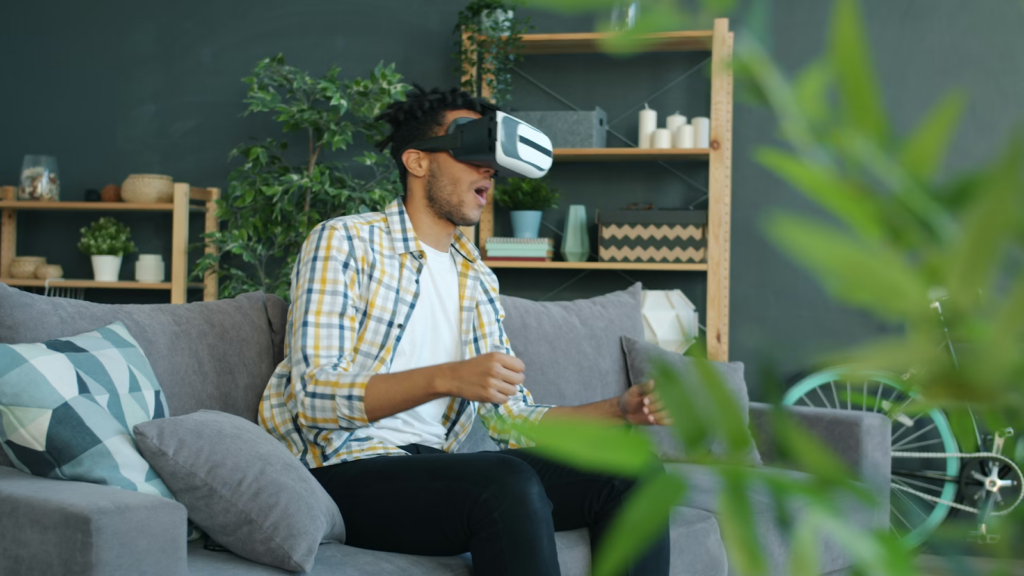
VR and AR: The New Wave of Indian Gaming and Why Big Investors Are Moving In
For years, India’s gaming scene has been shaped by mobile downloads and free-to-play hits. In 2025, that story begins to shift toward something more immersive: virtual reality headsets, AR filters over city streets, and mixed-reality arenas in malls and campus labs. The driving force behind this change is real money. Venture funds, strategic investors, and state governments are investing heavily in studios, infrastructure, and AVGC-XR parks, betting that India will not only participate in virtual worlds but also create them for the rest of the world.
India’s Immersive Market by the Numbers
The macros are hard to ignore. India’s AR/VR market was worth roughly USD 4.8 billion in 2023 and is projected to grow by more than 35% annually over the next decade, driven primarily by gaming and entertainment use cases. On the gaming side specifically, VR titles and experiences already generate billions in revenue, with forecasts pointing to nearly USD 13 billion in VR gaming by 2030 if current trends hold.
Augmented reality gaming alone is expected to climb from about USD 1.3 billion in 2024 to more than USD 9 billion by 2033, riding on cheap smartphones, 5G rollouts and a young population that lives on social apps. Add in the broader Indian gaming market, which analysts expect to grow from around USD 3.8 billion to more than USD 9 billion by 2029, and the investment thesis becomes obvious: immersive is the next layer on a massive base.
Why VR and AR Fit the Indian Gaming Puzzle
India’s demographics and infrastructure are tailor-made for an AR-first world. Hundreds of millions of players already game on mobile every month, and many of the most popular titles are built around camera use, location, or social overlays–the same building blocks that power AR. For studios, that means a relatively short jump from filters and mini-games to full AR experiences tied to local culture, film IP or cricket fandom.
VR demands more hardware, but even there the ground is shifting. Headset prices are falling, gaming cafés are experimenting with room-scale setups and universities are using VR labs for both training and entertainment. The result is a layered audience: AR for the mass market, VR for premium urban segments and public venues–a mix investors understand from markets like China and South Korea.
Investors Chase Scalable Immersive IP
Follow the money, and you’ll find a growing list of dedicated gaming and interactive media funds. Firms like Lumikai, Eximius and others have built portfolios around Indian studios, tools and platforms, while newer initiatives such as LVL Zero are offering grants and incubation specifically for game developers. The bet is that Indian teams can build exportable VR and AR IP in genres ranging from cricket sims to mythology-driven adventures.
The appeal is structural: development costs remain comparatively low compared to North America or Europe, but the addressable global audience is huge. If a single Indian VR sports title or AR city-builder connects with players in multiple regions, the upside in licensing, merchandising and live-ops is massive. Investors are also looking at middleware–engines, creator tools and analytics layers that can quietly sit underneath dozens of immersive games.
Live Experiences, Betting and the New Second Screen
As immersive technology advances, it brings gaming closer to the experience of ‘being inside the arena,’ and it naturally influences live entertainment and betting models. Imagine a fan watching a T20 match in AR, with real-time xG charts and shot maps displayed above the pitch, while a VR lounge replicates a stadium box where friends’ avatars gather. In this setting, interactive features—from predictions to small-stake bets–become an integral part of how some users engage with sport.
That’s where platforms built around casino online live formats try to evolve beyond simple grids of tables. For a segment of users, live-dealer roulette or card games streamed in real time feel like the casino equivalent of VR: highly visual, social and always “on.” When these experiences are integrated into broader ecosystems that also host sports odds and mini-games, they become a continuous entertainment loop. At the same time, India’s new law banning money-based online games raises hard lines around what can be offered domestically, so any live-casino or betting-style products have to be carefully geofenced, licensed and transparent about risks. Responsible-gaming tools, spending caps and identity checks are no longer nice-to-have features; they are survival requirements in a high-scrutiny market.
Super-Apps, VR Hubs and the Role of Mobile
Even as VR headsets grab headlines, mobile remains the command center. Many players will never own a headset but will still interact with VR-adjacent ecosystems: streaming VR events in 2D, controlling avatar cameras, or jumping into AR mini-games linked to their favorite teams or influencers. That’s why investors are so interested in platforms that bridge phones, browsers and immersive devices with one account system.
Within that universe, some users seek single-entry apps that combine live data, betting features, and casino-style entertainment with a familiar interface. For this group, options to download melbet app apk exemplify the appeal of a unified, mobile-first hub: one install, one login, and access to odds, quick casino rounds, and various live-event tie-ins. In a tightening regulatory environment, any such app targeting Indian users must adapt quickly–ensuring that real-money features comply with local laws, guiding players toward legal use cases, and emphasizing deposit controls and self-exclusion tools. When those safeguards are in place, the same data and personalization engines that power VR recommendations can also adjust limits, nudges, and educational prompts to promote healthier sessions.
Policy, Hardware and Access: The Friction Points
The opportunity is big, but the road is not smooth. Quality VR headsets still cost more than many urban monthly salaries, and café-based models depend on careful operations and high utilization to make the math work. On the policy side, India’s bill banning online money games has already forced major fantasy and card platforms to freeze real-money offerings, reminding investors that regulatory risk is real and can move fast.
There are also data-privacy concerns around immersive tech. VR and AR collect biometric clues, head and hand movements, room layouts and behavioral signals at far greater resolution than traditional mobile games. That means developers have to treat security and consent as core design elements, particularly when they plan to ship globally under stricter jurisdictions.
What This Wave Means for the Future of Indian Gaming
Taken together, VR and AR are less a side story and more the next logical chapter of India’s gaming rise. The country already has scale, talent and a deep mobile culture; immersive tech adds differentiation and export potential. If investors, policymakers and studios can align on hardware access, legal clarity and player protection, India has a realistic shot at becoming a global factory for VR and AR gaming IP, not just a consumer market.
The big picture is simple: the world is racing to build believable digital spaces, and India’s combination of engineering talent, creative depth and gaming volume makes it hard to ignore. For now, the smart money is treating VR and AR not as a gamble, but as a long-term position on how Indians–and millions of players beyond its borders–will choose to play in the decade ahead.