Essential Skills Every Youth Basketball Player Should Develop
Key Takeaways
- Mastering fundamental skills lays the foundation for advanced techniques.
- Consistent practice and dedication are essential for skill development.
- Understanding and applying these skills can significantly improve overall performance.
Table of Contents
- Dribbling
- Shooting
- Passing
- Defense
- Rebounding
- Court Awareness
- Physical Conditioning
- Mental Toughness
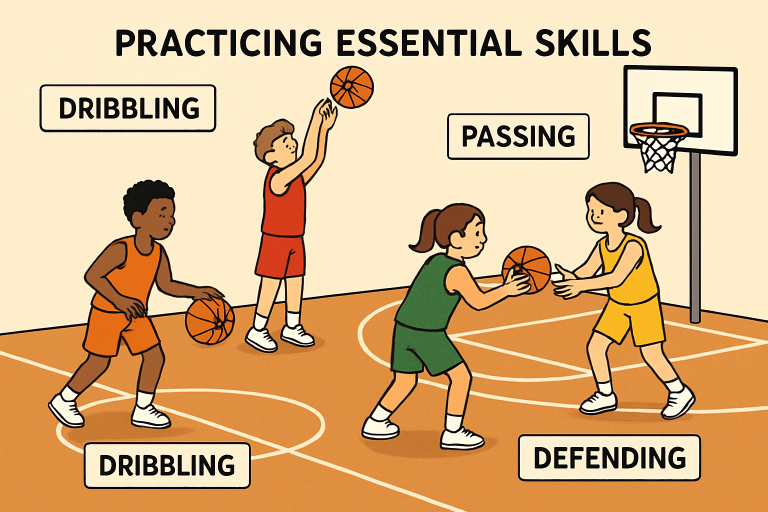
Success in basketball depends on more than just athleticism—it is built on a foundation of fundamental skills, smart decision-making, and a strong mindset. For young athletes striving to elevate their game, mastering the basics is just as important as learning advanced techniques. Whether practicing at home or joining structured boys youth basketball training, focusing on these essential abilities helps players stand out and contribute to their teams.
From dribbling and shooting to defense and mental toughness, consistent effort and a willingness to learn make all the difference. Every youth basketball player should prioritize continuous improvement, understanding that skill development is a lifelong process, not just something for beginners. With each skill honed, players gain confidence, on-court awareness, and the ability to adapt in high-pressure moments.
Dribbling
Why Dribbling Matters
Dribbling is the bedrock of effective ball movement. It enables players to move up the court, navigate around defenders, and set up offensive plays. Young athletes should focus on using both hands with equal confidence, keeping the head up to survey the court rather than relying solely on the sight of the ball.
Improving Ball Handling
Consistent practice with stationary and movement-based dribbling drills builds muscle memory. Incorporate exercises such as figure-eight dribbles, crossover moves, and dribbling through cones to improve speed and control. Working on changing pace quickly also helps players remain unpredictable to defenders.
Shooting
Key Shooting Techniques
Scoring points requires accurate and consistent shooting. Fundamental components include proper hand placement, a balanced shooting stance, and a smooth follow-through. Players can refine these mechanics by studying reliable resources—according to WikiHow, clear guidance on foot positioning, grip, and release can help athletes build stronger foundational technique. Players should also practice set shots, jump shots, and layups from various court positions, focusing on repetition to develop muscle memory and long-term accuracy.
Confidence Under Pressure
Youth players benefit from practicing under game-like conditions and incorporating challenges into drills. Setting targets, tracking progress, and making practice competitive can boost confidence—an essential ingredient for clutch performances during real games.
Passing
The Foundation of Team Play
Effective passing makes an offense dynamic and unpredictable. Learning chest passes, bounce passes, and overhead passes equips players for different scenarios. Quickly recognizing open teammates and delivering crisp, accurate passes are skills that set great playmakers apart.
Drills for Sharper Passing
Partner passing drills, passing on the move, and react-and-pass exercises teach players to make fast decisions. Coaches should emphasize communication and eye contact, reinforcing that passing is just as valuable as scoring for team success.
Defense
Staying in Front
Solid defense can neutralize even the most potent opponent. Youth players should work on stance, lateral movement, and understanding defensive roles. Developing anticipation—predicting an opponent’s next move—leads to more steals and forced turnovers.
One-on-One and Team Defense
Drills such as closeouts and shuffle steps build agility, while practicing helps defense and rotations foster team chemistry. Emphasis on defense teaches responsibility and accountability, attributes valuable both on and off the court.
Rebounding
Winning Possession
Rebounding is critical for gaining extra offensive opportunities and limiting the opponent’s chances. Key techniques include boxing out, timing jumps effectively, and aggressively pursuing the ball after every shot. Practice with both offensive and defensive rebounding scenarios ensures players are versatile in any game situation.
Court Awareness
Reading the Game
Court awareness, or basketball IQ, refers to a player’s ability to read the game, recognize patterns, and make split-second decisions. This skill is honed through experience and deliberate practice, including understanding spacing, timing cuts, and recognizing defensive shifts.
Enhancing Team Play
Players who communicate on the court and pay attention to the positions of teammates and opponents help their teams execute better plays, avoid turnovers, and exploit weaknesses in the defense.
Physical Conditioning
Building Endurance and Strength
A physically conditioned athlete can perform at a high level from tip-off to final whistle. Incorporate aerobic exercise, strength training, and agility work into regular routines. Core stability, balance, and flexibility are just as important as raw power for well-rounded athleticism.
Injury Prevention
Consistent conditioning not only improves performance but also helps prevent common injuries associated with youth basketball, such as sprains and strains. Balancing training and adequate recovery is essential for long-term growth and health.
Mental Toughness
Staying Focused and Confident
Basketball is as much a mental challenge as it is a physical one. Players should work on staying focused during stressful moments, overcoming adversity, and maintaining a positive attitude after mistakes.
Embracing the Learning Process
Encouraging a growth mindset helps youth athletes learn from setbacks and use challenges as opportunities for improvement. This mental framework supports both individual development and team culture.
Developing a comprehensive skill set in youth basketball requires commitment, patience, and proper guidance. By focusing on the fundamental areas described above, players can lay the groundwork for long-term success and discover the rewards of continuous improvement on and off the court.