How Group Games Improve Social Skills and Teamwork in Kids
Introduction: Why Play Matters More Than Ever
Here’s something you’ve probably noticed if you spend time around children: basic social interactions seem harder for them now than they were a generation ago. Playgrounds sit empty while screens glow brighter. Many kids genuinely don’t know how to share space, negotiate turns, or navigate the messy work of resolving disagreements face-to-face. The numbers back this up, research indicates that 96.1% of children had encountered video games by age six, meaning digital entertainment has largely displaced those crucial in-person experiences. But there’s encouraging news. You don’t need pricey programs or therapeutic interventions to reverse this trend.
Understanding the Power of Play
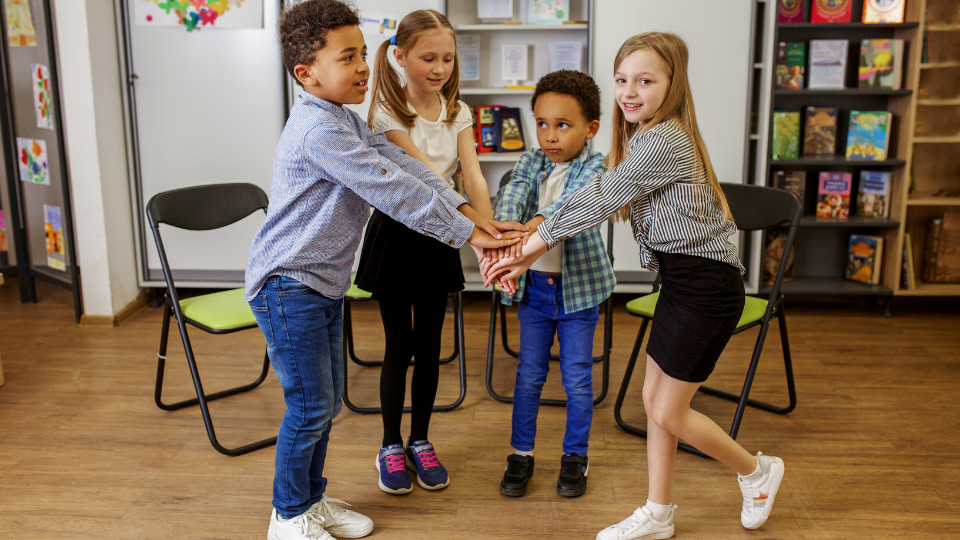
Group activities deliver something screens can’t replicate, they’re genuinely essential for healthy childhood development. Something remarkable happens in kids’ brains when they play together. They start decoding facial expressions, grasping emotional nuances, and calibrating their responses to match social contexts.
Why Cooperative Play Works
Kids are hardwired to learn through interaction with their peers. Engaging in activities together becomes a laboratory for real-world skills, wrapped in safety and low stakes. They stumble, recalibrate, and discover what actually works. That’s precisely where deep, lasting learning takes root.
The research tells a compelling story. One 12-week experiment involving elementary students revealed that communication skills jumped by 51% when children took part in balanced group activities. We’re not talking about marginal gains here, this represents fundamental transformation.
The Real-World Connection
These abilities extend far beyond classroom walls. Kids social development through play shapes their trajectory in school, friendships, and eventually professional life. Children who nail cooperation early on show better conflict management, forge friendships with greater ease, and adapt to unfamiliar situations with considerably less anxiety.
For building these foundational capabilities, Outdoor Group Games offer natural, authentic settings where children practice teamwork and tackle problems together. Take Castle Sports, for instance, they’ve transformed how schools and community programs think about active play. Their portable game systems, including 9 Square and Gaga Ball, let you set up compelling activities that spark movement and collaboration.
Rain or shine, indoors or out, these games deliver consistent practice. What makes them brilliant? Kids have zero awareness they’re learning. They’re simply enjoying themselves while absorbing critical life competencies.
The benefits of group games ripple outward from the playing field. You’ll see kids applying cooperation skills with siblings at home, demonstrating patience when circumstances don’t break their way.
Building Blocks of Social Growth
Not every game produces identical outcomes. The most effective social skills activities zero in on specific developmental needs while maintaining genuine engagement.
Communication Skills in Action
Group games for kids manufacture organic moments for verbal exchange. Children must articulate rules, bargain for roles, and state their needs with clarity. There’s no screen to hide behind, no way to dodge interaction entirely.
Games requiring teamwork coax quieter children into speaking up. They realize their contributions carry weight. Meanwhile, more vocal kids practice the art of listening. Everyone rehearses the natural rhythm of genuine conversation.
Problem-Solving Together
Teamwork games for children throw up challenges that resist individual solutions. Whether you’re looking at obstacle course relays or group puzzle competitions, kids must think as a unit. They grasp that diverse viewpoints generate superior solutions.
This collaborative approach builds what psychologists call cognitive flexibility. Children discover multiplicity, more than one correct answer exists, and countless paths lead to success.
Emotional Intelligence Development
Playing alongside others means processing disappointment, celebrating victories, and navigating everything between those extremes. Kids rehearse emotional regulation when they lose, demonstrate grace during wins, and offer support to struggling teammates. You simply cannot teach these lessons from a textbook or worksheet.
Age-Appropriate Activities That Work
Different developmental stages demand different strategies. What captivates preschoolers will bore middle schoolers into oblivion, and the reverse holds equally true.
Younger Children (Ages 3-5)
Little ones require straightforward rules and brief rounds. Circle games, elementary relay races, and basic turn-taking activities hit the sweet spot. They’re still mastering how to share physical space and follow group instructions without constant redirection.
Elementary Years (Ages 6-10)
This cohort thrives on more intricate teamwork games for children. Multi-step challenges, strategy-dependent activities, and sports with transparent objectives maintain their focus. They’re developmentally ready to handle competitive dimensions alongside cooperative ones.
Tweens and Teens (Ages 11+)
Older kids respond to sophisticated challenges mirroring adult scenarios. Problem-solving competitions, community service initiatives, and adventure-based programs speak to their emerging sense of identity and larger purpose.
Tracking Progress Effectively
You’ll recognize that social skills activities are delivering results when you spot specific behavioral shifts. Kids who previously avoided group contexts start volunteering for team assignments. Children who wrestled with conflict begin proposing compromises. These observable transformations confirm genuine development is underway.
Measurable Improvements
Schools rolling out structured group play programs document remarkable outcomes. One elementary classroom incorporating balanced competitive and cooperative activities saw social conflicts plummet by 61% (https://www.smoothiewars.com/blog/competitive-vs-cooperative-learning-benefits). Teachers redirected time from mediating disputes toward actual instruction.
You can monitor progress at home with equal effectiveness. Pay attention to how your child navigates disagreements with siblings or tackles group assignments for school. Growing patience, enhanced listening, and spontaneous cooperation all telegraph meaningful growth.
Creating Supportive Environments
Success demands more than simply organizing games. Adults must establish psychologically safe environments where mistakes become learning opportunities rather than failures worth avoiding. Celebrate earnest effort alongside measurable outcomes. Rotate leadership positions so everyone rehearses different skill sets.
Activity Comparison: Indoor vs. Outdoor Options
| Factor | Indoor Games | Outdoor Games |
| Space Required | Minimal, works in classrooms | More room for movement |
| Weather Dependent | No limitations | Requires good conditions |
| Energy Level | Moderate activity | High-energy options |
| Equipment Needs | Basic supplies | May need specialized gear |
| Group Size | Best for 6-12 kids | Can accommodate larger groups |
| Skill Focus | Communication, strategy | Physical cooperation, trust |
| Setup Time | Quick and simple | May take longer |
Your Questions Answered
When should we start group activities with young children?
Begin around age two with simple parallel play, then progressively introduce cooperative activities by age three. Even toddlers extract benefits from elementary turn-taking games that cultivate early social awareness and peer patience.
How quickly will we see social skill improvements?
Most children demonstrate noticeable changes within 4-6 weeks of consistent group play. Some kids require additional time, particularly if they’re exceptionally shy or carry limited prior group experience. Your patience matters significantly more than velocity.
Can competitive games help or hurt social development?
Both competition and cooperation deliver value when you balance them properly. Pure competition can amplify anxiety, yet friendly contests teach gracious winning and losing. Blend competitive elements with collaborative challenges for optimal results.
Moving Forward with Confidence
Group games for kids aren’t optional enrichment, they represent essential instruments for cultivating socially competent children. The research speaks clearly, the methodologies have proven themselves, and implementation remains refreshingly straightforward. Whether you’re a parent coordinating playdates or an educator designing classroom activities, you now possess a concrete roadmap for success.
Begin modestly this week. Select one game matching your children’s developmental stage and interests. Observe what unfolds when kids collaborate toward shared objectives. You’ll witness the benefits of group games emerge organically, constructing competencies that endure lifelong. Our children genuinely deserve these opportunities to flourish through play.