A Simple Guide to Ancestry Testing in India: Understanding Your Roots with Science
Most of us grow up hearing stories about our ancestors—where they lived, what they did, and how our family came to be what it is today. Sometimes, these stories are complete; other times, they leave us wondering about the missing pieces. That’s where modern genetic science becomes a powerful tool. Today, you can use DNA to explore where your family came from, how old your genetic line might be, and what your roots say about your identity. With Ancestry Testing in India becoming more accessible, many people are now turning to DNA testing to trace their ancestral origins and roots.
In this blog, we’ll discuss various aspects of ancestry testing, including it’s types, significance, and the best place to get one. Stay with us to learn more.
Why People Want to Explore Their Ancestry
Your ancestry is not just a set of names on a family tree. It’s an entire journey—spread across centuries—written inside your DNA. You inherit it from your parents, who inherited it from theirs, and so on. Over generations, this genetic story becomes a blend of migrations, communities, cultures, and survival.
Many people choose ancestry testing because:
- They want to know where their ancestors lived hundreds or thousands of years ago.
- They want to confirm or expand on what they’ve heard from parents and grandparents.
- They’re curious about the genetic traits they carry.
- They want to trace ethnic, regional, or community origins.
- They’re building a family tree and want deeper evidence.
- They want to reconnect with lost roots.
As you explore your origins, you’ll notice something interesting—DNA doesn’t lie. Even when paperwork or family stories feel incomplete, your DNA holds the truth.
How an Ancestry DNA Test Works
An ancestry test usually starts with a small sample, like a cheek swab. The lab analyzes specific positions in your DNA that are known to carry ancestry markers. These markers link you to different population groups, migration paths, and ethnic origins around the world.
When you send your sample to a laboratory, the scientists compare your DNA with global genetic reference groups. These groups represent ancient populations and modern communities, helping you see how your genes connect with different regions.
You may also learn about population percentages. For example, your report may say you have links to Central Asian groups, East Asian groups, African populations, European lineages, or indigenous Indian communities. These percentages help you build a larger picture of where your ancestors belonged in the global map of human history.
This is the basic foundation of an Indian Ancestry DNA Test, which many people use to understand how their family migrated over generations. Your DNA reflects a journey much older than written records, allowing you to see thousands of years into the past.
Different Types of Ancestry Tests You May Come Across
Not all ancestry tests are the same. Depending on the specific type of information intended, you can choose any one or more of the following:
1. Autosomal Ancestry Tests
These tests study your DNA from both parents. They’re the most common and provide a wide and balanced view of your lineage.
2. Y-Chromosome Tests (Paternal Line)
These tests look at DNA passed strictly from father to son. They reveal your direct paternal lineage, including surnames or clan-related histories.
3. Mitochondrial DNA Tests (Maternal Line)
These tests study DNA passed from mothers to children. Both men and women can take this test to trace maternal ancestry.
With these tests, you get a deeper understanding of where each branch of your family tree originated. Many people combine multiple tests to get a complete ancestral picture.
Your Guide to Choosing an ancestry DNA test in India
When you look for an ancestry DNA test in India, start by focusing on what kind of information you want to explore. Some tests focus on regional ancestry, while others show global migration paths. Here are the most common types of ancestry tests opted for:
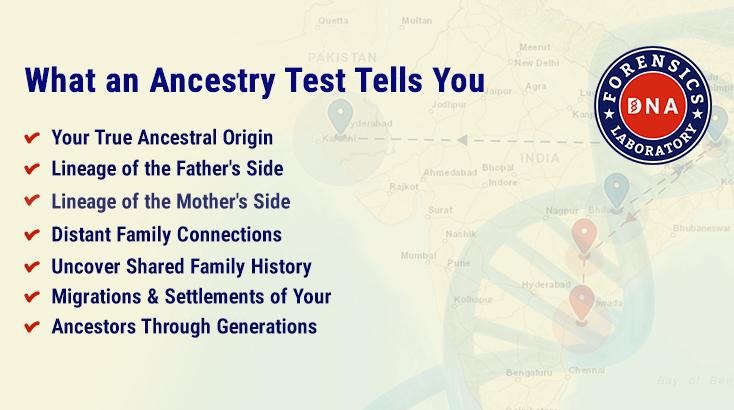
Paternal Lineage Ancestry Test: This test is done using the Y-DNA from the male members of your family to trace the origin of your Y-DNA haplogroup. A haplogroup is a genetic population group, including individuals from one common ancestor over hundreds or thousands of years.
Maternal Lineage Ancestry Test: Maternal lineage testing tests mtDNA. Unlike YDNA, which is found only in males, mtDNA, that is, mitochondrial DNA, is inherited by both genders from the mother. It traces the mtDNA haplogroup.
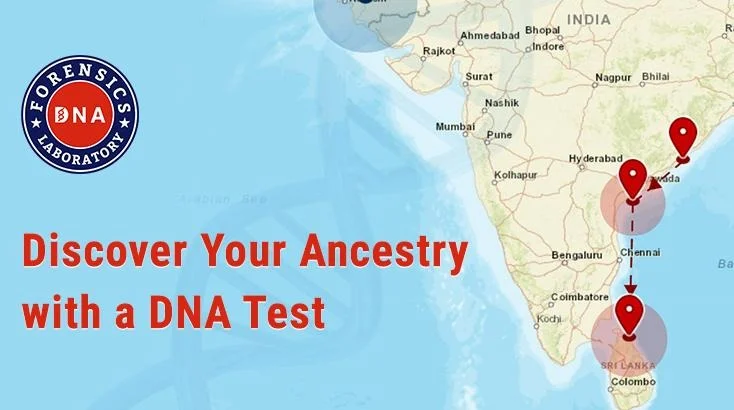
GPS Origins Test: GPS Origins DNA ancestry test is one of the most advanced DNA tests, which can pinpoint the geographical location of your ancestors, who dwelled on the earth thousands of years ago. It includes information about specific regions where your ancestral DNA first originated and your forefathers’ last three major migration routes across the globe.
You can get all these tests from DNA Forensics Laboratory Pvt. Ltd., one of India’s most trusted DNA testing providers.
Connecting the Past with the Present: Why DNA Makes It Possible
Earlier, people relied mostly on handwritten records, history conveyed or spread verbally, or guesswork to trace ancestry. DNA testing changed everything. Now, you have a scientific tool that carries information passed through centuries of family lines. Your DNA connects you to populations across regions and timelines in ways documents cannot.
This process becomes even more meaningful with an Indian Ancestry DNA Test, which reveals how your genetic line moved through the Indian subcontinent and beyond. You might uncover connections with ancient tribes, migrations across Asia, or historical community lines that shaped your heritage.
How Professional DNA Testing Helps You Get Reliable Results
While curiosity makes you explore ancestry, precision makes the journey meaningful. Accurate results depend on:
- Good sample collection
- Advanced laboratory systems
- Reliable population databases
- Experienced genetic scientists
- Secure data handling
When you choose professional ancestry testing, you get more dependable results, clearer interpretations, and reports that make sense even if you aren’t familiar with genetic science.
Where You Can Get Safe and Reliable Ancestry Testing
If you’re planning to explore your roots, you should choose a lab that uses validated techniques and follows strict testing standards. A reliable provider ensures that your sample is handled professionally, the technology is updated, and your privacy is protected at every step.
This is where DNA Forensics Laboratory Pvt. Ltd. stands out. With over 10 years of experience, advanced technologies, and 400+ sample collection centers across India and abroad, it offers dependable ancestry testing services. The company is also known for being the only provider of legal DNA tests accepted by honorable courts of law in India.
If you want a fast turnaround time, reliable methods, and a smooth experience from start to finish, you can reach out to DNA Forensics Laboratory for support. The team can help you pick the right test, understand your ancestry report, and explore your genetic story with confidence.
Want to learn more or book your test? Feel free to call us at +91 8010177771 or WhatsApp at +91 9266615552.
Frequently Asked Questions
1. What are the most accurate ancestry DNA test kits available?
The most accurate kits use advanced genetic markers and strong global reference populations. DNA Forensics Laboratory provides professionally handled ancestry testing using validated methods for dependable and clear results.
2. Which ancestry testing service offers the largest database for matching relatives?
At DNA Forensics Laboratory Pvt. Ltd., our GPS Origins Ancestry Test uses one of the largest databases to pinpoint your ancestors’ origin, narrowed down to towns and cities. Besides, this test also provides information about your ancestors’ last three major migrations.
3. Where can I send my saliva sample to get my ancestry tested?
You can send your sample to our testing facility after you have booked the test with us. We send the kit to your address, from which you collect your DNA sample, as per the instructions on the kit.
Once collected and properly labelled, you have to simply send the kit to our testing lab and within a matter of a few days, we will share your report with you. You can also choose to visit one of our sample collection centers near you and hand over the sample to our executive. Contact us to learn about our collection centers’ locations.
4. How much do ancestry DNA tests typically cost?
Costs depend on the test type and the complexity involved. Contact us to share your requirements and learn about the cost of the test.