Digital Lifestyles in the Philippines 2026: How Users Balance Content, Gaming, and Online Interaction
In the Philippines, digital entertainment doesn’t arrive as an “activity.” It arrives as a rhythm between commutes, in lunch breaks, and during late-night scrolls when the house is quiet and the phone is loud. What changed by 2026 is not just how much content people can access, but how effortlessly it layers: one clip leads to a chat, a score update leads to a stream, and the day starts to feel narrated by notifications.
Connectivity sets the stage. By the end of 2025, the country counted 98.0 million internet users, while cellular mobile connections reached 137 million. In that environment, leisure is often bundled, and for adult users, the second screen can include sports interaction that sits near odds and markets. For some adults, online betting PH fits inside the same “watch-and-check” habit as highlights, live stats, and group chats. Digital life increasingly shows everything in one place, and users learn to manage the mix.
The phone is the remote control for daily life
Mobile-first isn’t a trend anymore; it’s the default design constraint. At the end of 2025, the median mobile download speed in the Philippines was 59.64 Mbps, with fixed internet at 105.17 Mbps, which was fast enough for streaming to feel casual rather than planned. That speed changes behavior: people don’t “save content for later” as often, because later is always one tap away. It also pushes platforms toward frictionless viewing: short sessions, quick resumes, and feeds that assume your attention will be interrupted.
From the background to the main event
Streaming in 2026 is less about sitting down and more about sliding in and out. YouTube’s advertising reach in the Philippines was 59.6 million users in late 2025, a reminder that video is one of the country’s default media formats. Social platforms remain deeply woven into daily routines too, with Facebook’s ad reach equivalent to 81.9% of the total population at the end of 2025.
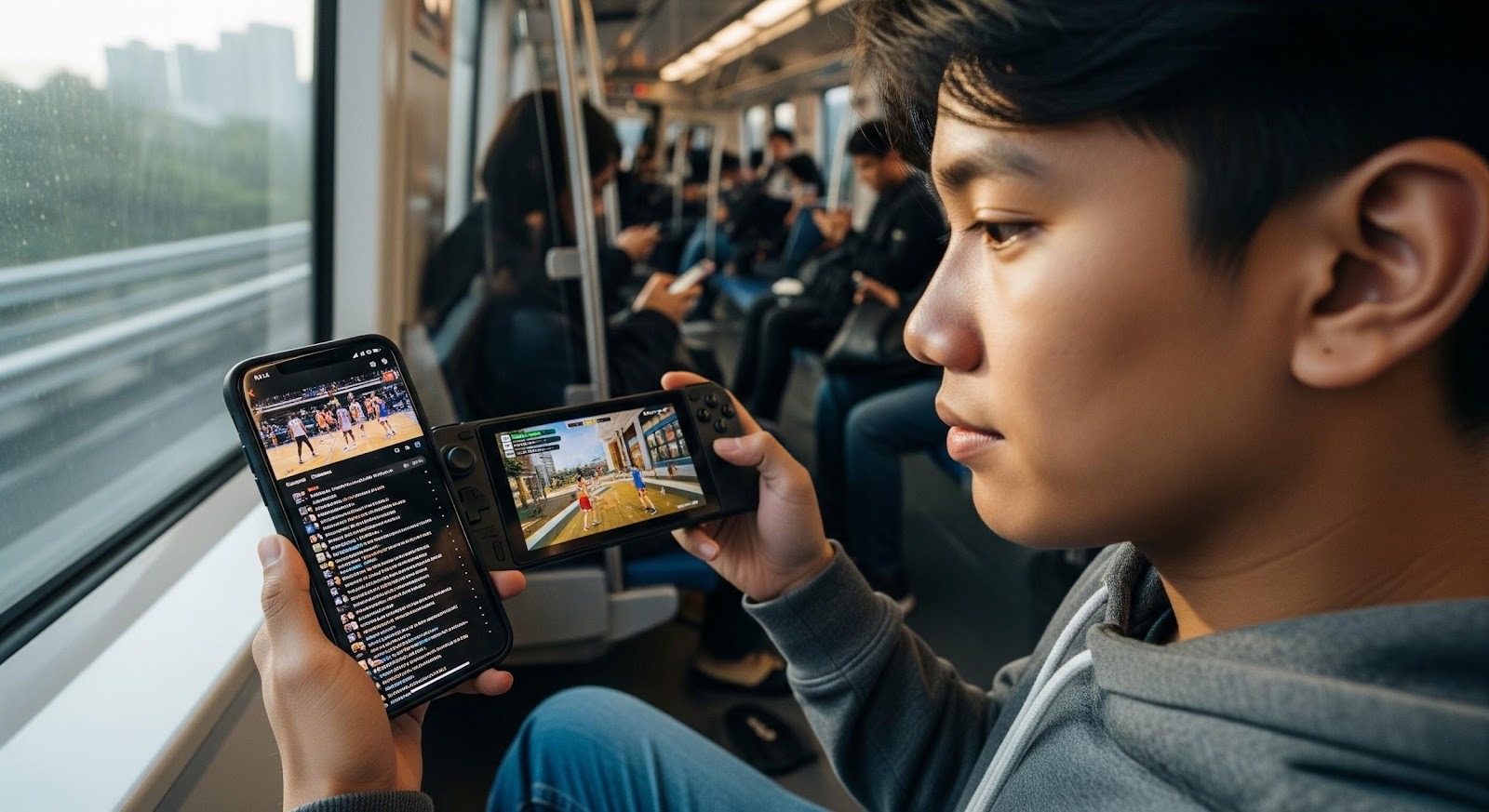
Sports amplifies this “always-on” model because the content is time-sensitive. Services such as Pilipinas Live position themselves around local leagues like the PBA and UAAP, alongside international competitions such as the NBA and FIBA, built for fans who want the game, the highlights, and the updates in the same place. For many viewers, the stream is only half the experience; the other half is the live commentary happening in messages and reaction posts.
Mobile games fill the gaps
The Philippines’ gaming habit often looks like “stolen time”: a match in a queue, a few rounds before bed, a long session on a weekend. That doesn’t mean it’s small. Mobile Legends: Bang Bang remained the world’s most-watched mobile esports title in 2025, and analysis of its competitive ecosystem highlights the Philippines as one of the standout regions for league audiences.
The appeal isn’t just competition; it’s community. Ranked ladders and team play create recurring social patterns: friends become squads, schedules form around tournaments, and game knowledge becomes a language that travels outside the app. In 2026, mobile games don’t compete with social media; they behave like social media, just with a scoreboard.
Sports fandom turns into a two-screen ritual
Basketball remains the country’s loudest sports conversation, and the digital layer makes it louder. Fans who follow the NBA or PBA often watch while tracking stats, reading injury updates, and arguing about rotations in real time. The modern habit is not passive viewing; it’s participation. For adult users, basketball betting sites can sit alongside those same live numbers, turning pre-game talk into a kind of price-checking. The sensible approach is simple: treat odds as information, set limits before the game starts, and don’t let a swing run turn decisions into impulse.
Communities decide what spreads
Online communities now function like informal editors. A clip becomes “important” because a group chat reposts it, because a creator reacts to it, because an algorithm detects the heat and pushes it harder. In the Philippines, that community layer spans family group threads, fandom pages, and platform-based spaces that feel like digital barangays.
Even smaller platforms illustrate the breadth of online participation. DataReportal’s Philippines report lists Reddit’s advertising reach at 15.1 million users in late 2025, which suggests a sizable audience for long-form discussion, niche interests, and deep-dive threads alongside the faster feed culture. Different spaces serve different moods: quick laughs in one place, long debates in another, and sports discourse almost everywhere.
When boundaries become skills
In 2026, adult-oriented entertainment rarely lives “somewhere else.” It often appears in the same app neighborhoods as sports streams, short videos, and game hubs: sports interaction, prediction-based platforms, and casino-style gaming presented as adjacent options. A menu item for an online casino Philippines lobby can show up near sports content, because many digital services optimize for session time rather than single-purpose visits. Separating budgets, defining time windows, and making a deliberate choice about what tonight is for are the habits that keep bundled entertainment from turning into accidental overuse.
Balance as a constant practice
The Philippines’ digital lifestyle in 2026 is not about choosing one platform; it’s about managing the seams between them. Streaming fills quiet moments, games organize friendships, sports create shared drama, and communities provide the running commentary that makes content feel alive. The more seamless the ecosystem becomes, the more valuable clear boundaries become. The real flex is not being online; it’s knowing when to stop.