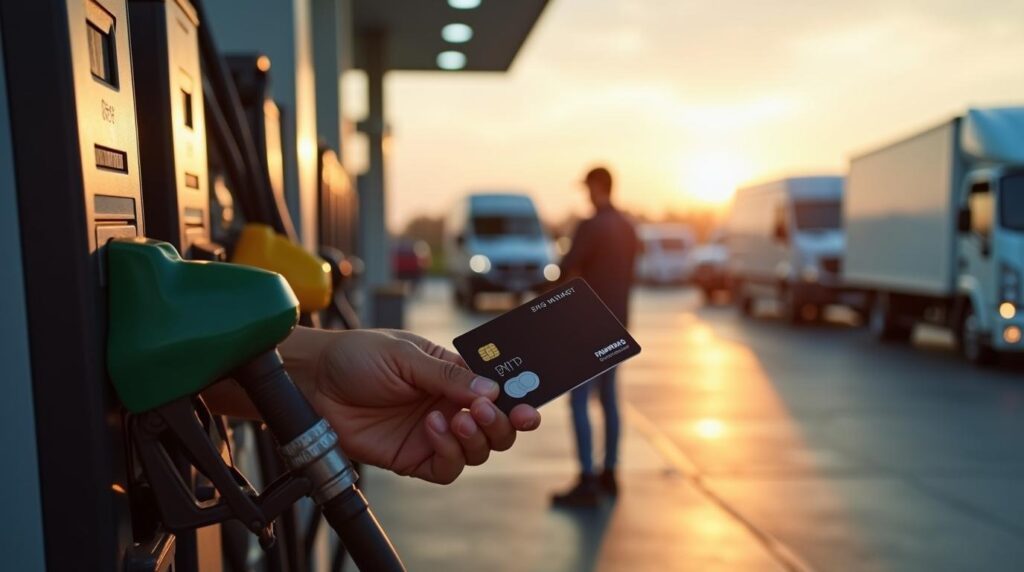
Gas Cards vs Credit Cards for Fuel Savings and Rewards
What happens when fuel prices spike unexpectedly? Gas cards can prevent budget overruns and streamline expense tracking while delivering rewards, discounts, and fleet management benefits that traditional payment methods miss. Whether you’re managing a business fleet or simply trying to maximize savings at the pump, understanding the differences between specialized fuel cards and general credit options—including Phillips 66 gas cards—can significantly impact your bottom line.
What Are Gas Cards and How Do They Work
Fuel cards function as specialized payment tools designed exclusively for purchasing gasoline, diesel, and related services at participating stations. Unlike traditional credit instruments, these cards often feature built-in controls that restrict purchases to fuel-related transactions, making them ideal for expense management and budget control.
The mechanics involve either prepaid balances loaded onto the card or credit limits established by the issuer. When you swipe at the pump, the system automatically applies any available discounts, tracks the transaction details including gallons purchased and location, and sends this information to your account dashboard for real-time monitoring.
Business owners particularly benefit from the detailed reporting that tracks each vehicle’s fuel consumption, driver spending patterns, and overall fleet expenses. Individual consumers gain access to loyalty programs that stack savings through per-gallon discounts and points accumulation for future purchases.
Types of Gas Cards Available in 2025
Branded Fuel Cards (Shell, Exxon, BP)
Station-specific cards from major oil companies offer the deepest discounts at their proprietary locations. Shell’s Fuel Rewards program, for instance, provides immediate cents-off-per-gallon pricing when members swipe their card, with additional savings opportunities through partner purchases at grocery stores and restaurants.
These branded options typically feature tiered rewards structures where higher monthly fuel volumes unlock greater discounts. Chevron’s Techron Advantage card exemplifies this approach, offering 3 cents off per gallon for the first 300 gallons monthly, then increasing to 7 cents off for volumes exceeding that threshold.
Universal Fuel Cards for Multi-Station Access
Universal cards provide flexibility by working across multiple brand networks, eliminating the need to search for specific stations. WEX and Fuelman lead this category, accepted at over 95% of U.S. fuel locations including both major chains and independent stations.
The trade-off for broader acceptance typically involves slightly lower discount rates compared to single-brand cards. However, the convenience factor and comprehensive network coverage make these ideal for drivers who travel extensively or operate in areas with limited station choices.
Fleet Management Cards for Businesses
Commercial fleet cards integrate sophisticated management tools beyond simple payment processing. These solutions include driver ID requirements, purchase controls by time and location, and automatic integration with accounting software for streamlined billing and expense allocation.
Advanced features like odometer tracking, maintenance scheduling alerts, and unauthorized usage notifications transform these cards into comprehensive fleet management platforms. Companies can set individual spending limits, restrict purchases to fuel only, or allow additional services like oil changes and repairs at approved locations.
Prepaid vs Credit-Based Options
Prepaid fuel cards eliminate credit checks and provide strict spending control by limiting purchases to the loaded balance. Parents often choose these for teen drivers, while businesses use them for contractors or temporary employees who need fuel access without full corporate card privileges.
Credit-based alternatives offer greater flexibility and often superior rewards but require approval based on creditworthiness. These typically feature higher transaction limits and may include additional benefits like roadside assistance or travel insurance coverage.
Top Gas Rewards Programs Comparison
Shell Fuel Rewards Program Benefits
Shell’s program stands out for its multi-tier earning structure that rewards both fuel purchases and everyday spending at partner retailers. Members automatically save 5 cents per gallon on every fill-up, with opportunities to earn additional discounts through dining, shopping, and travel purchases tracked through the linked app.
The Gold Status tier, achieved by filling up 6 times in 3 months, permanently increases the base discount to 10 cents per gallon. Stack this with promotional offers that frequently reach 25 cents off, and regular drivers can achieve substantial annual savings.
Exxon Mobil Rewards+ Earning Structure
Exxon Mobil’s points-based system awards 3 points per gallon on fuel and 2 points per dollar on convenience store purchases. Every 100 points converts to $1 in savings, creating a straightforward value proposition for customers who appreciate transparent redemption options.
Premium members paying $0 annual fee after the first year receive exclusive offers including bonus point promotions and member-only pricing events. The program’s strength lies in its simplicity and the widespread availability of Exxon and Mobil stations across highways and urban areas.
Circle K Inner Circle Simplicity
Circle K revolutionized fuel loyalty by eliminating complicated point calculations in favor of immediate cents-off pricing. Members save 3 cents per gallon instantly, increasing to 10 cents off during regular promotional periods throughout the month.
The free membership includes additional perks like daily deals on snacks and beverages, making it attractive for customers who frequently purchase convenience items alongside fuel. The mobile app enables contactless payment and automatically applies all available discounts without requiring manual activation.
BP Earnify Savings Calculator
BP’s newest program uses predictive analytics to show potential savings based on your driving patterns and local fuel prices. The platform aggregates discounts from multiple sources including instant rebates, manufacturer promotions, and location-based offers to maximize value on each transaction.
Members earning 5 cents off per gallon baseline can boost savings to 15 cents or more by completing simple activities like referring friends or participating in quarterly challenges. The integrated calculator helps users understand their actual return on investment compared to paying standard pump prices.
Gas Cards vs Credit Cards for Fuel Purchases
Reward Rates and Cashback Comparison
Traditional cashback credit offerings typically return 1-3% on fuel purchases, translating to roughly 3-9 cents per gallon at current prices. Specialized fuel cards often deliver fixed per-gallon discounts ranging from 3-10 cents, with potential for higher savings through promotional stacking and volume bonuses.
The mathematics favor fuel-specific cards for high-volume users. Someone purchasing 100 gallons monthly saves $10 with a 10-cent discount versus $9 maximum from a 3% cashback rate at $3 per gallon. This gap widens as consumption increases, making dedicated cards particularly valuable for businesses and long-distance commuters.
Security Features and Fraud Protection
Fuel cards incorporate specialized security measures designed to prevent common fraud scenarios at service stations. Driver ID numbers, odometer validation, and real-time transaction alerts create multiple authentication layers that general credit products lack.
Restricted merchant codes ensure these cards only work at fuel pumps and authorized service locations, eliminating the risk of unauthorized purchases at other retailers. This focused approach reduces fraud exposure while simplifying expense reconciliation for business accounts.
Expense Tracking and Reporting Tools
Comprehensive reporting distinguishes fuel cards from standard payment methods. Detailed transaction logs capture gallons purchased, price per gallon, location, time, and vehicle identification, creating audit-ready documentation for tax purposes and expense management.
Integration capabilities with accounting platforms like QuickBooks and fleet management software automate expense allocation and eliminate manual data entry. Customizable reports segment spending by driver, vehicle, or department, providing insights that inform operational decisions and identify cost-saving opportunities.
Business and Fleet Gas Card Benefits
Cost Control and Budget Management
Businesses gain unprecedented control over fuel expenses through customizable spending parameters. Administrators set daily, weekly, or monthly limits for individual drivers, restrict purchases to specific time windows, and define acceptable purchase categories to prevent unauthorized spending.
Real-time visibility into fuel consumption patterns reveals inefficiencies like excessive idling or route deviations. Companies report average savings of 15-20% after implementing comprehensive fuel management programs that combine card controls with driver education and route optimization.
Transaction Monitoring and Reporting
Automated exception reporting flags unusual activity like purchases exceeding vehicle tank capacity or transactions outside designated territories. These alerts enable immediate investigation of potential fraud or policy violations before significant losses occur.
Detailed analytics dashboards display key performance indicators including cost per mile, fuel efficiency trends, and comparative driver performance. This data supports evidence-based decision making for vehicle replacement, route planning, and driver training initiatives.
Tax Deduction and Accounting Integration
IRS-compliant reporting simplifies fuel tax credit claims and standard mileage deduction calculations. Automated IFTA reporting for interstate commercial vehicles eliminates hours of manual compilation while ensuring accuracy for regulatory compliance.
Seamless integration with enterprise resource planning systems synchronizes fuel expenses with general ledger accounts, accelerating month-end closing processes. Electronic billing consolidates all transactions into single invoices, reducing administrative overhead and improving cash flow management through extended payment terms.
Smart Card Technology and Security Features
EMV Chip Protection vs Magnetic Stripe
Modern fuel cards equipped with EMV chip technology generate unique transaction codes that prevent duplication, virtually eliminating counterfeit fraud that plagued magnetic stripe cards. The cryptographic security makes intercepted data useless for creating fake cards.
Chip-enabled readers at pumps complete transactions faster while maintaining higher security standards. This technology reduces chargebacks and disputes, saving businesses thousands in administrative costs and lost revenue from fraudulent transactions.
PIN Authentication and Real-Time Alerts
Multi-factor authentication combining card possession with PIN knowledge creates robust security exceeding signature-based verification. Driver-specific PINs enable individual accountability while preventing unauthorized card sharing among employees.
Instant transaction notifications via SMS or mobile app alert account holders to every purchase, enabling immediate response to suspicious activity. Geofencing capabilities trigger additional alerts when cards are used outside predetermined boundaries, adding another layer of fraud prevention.
Unauthorized Usage Prevention
Velocity controls limit transaction frequency and amount within specified timeframes, preventing rapid-fire fraud attempts that characterize stolen card abuse. Merchant category restrictions ensure cards function only at fuel and automotive service providers, eliminating broader fraud exposure.
Biometric authentication options emerging in 2025 include fingerprint verification at pump terminals and facial recognition through mobile apps. These advanced measures virtually eliminate unauthorized usage while streamlining the payment process for legitimate users.
Regional Network Coverage and Acceptance
National Chain Availability
Major fuel card networks maintain relationships with over 240,000 locations nationwide, ensuring coverage in every state and most municipalities. Urban areas typically offer multiple accepting stations within a few miles, while strategic partnerships guarantee availability along major interstate corridors.
Coverage density varies by card type, with universal cards accepted at 95% of stations versus brand-specific cards limited to 10-15% of locations. Understanding your typical routes and fuel stop patterns helps determine whether broad acceptance or deeper brand-specific discounts better serve your needs.
Rural and Highway Coverage Analysis
Rural coverage presents unique challenges where independent stations may dominate local markets. Universal cards generally provide better rural acceptance, though discount rates might be lower than at participating chain locations in urban areas.
Highway coverage focuses on truck stops and travel centers that cater to commercial vehicles and long-distance travelers. These locations often provide additional services like showers, parking, and maintenance, making comprehensive fuel cards valuable beyond simple fuel purchases.
Mobile App Integration and Payment Options
Mobile payment integration transforms smartphones into virtual fuel cards, eliminating physical card requirements while maintaining all tracking and control features. Apps enable remote card management including instant lock/unlock capabilities and temporary limit adjustments.
Contactless payment options through NFC technology reduce transaction time and eliminate PIN pad contact, addressing hygiene concerns while improving customer experience. Digital receipts automatically sync to expense management systems, further streamlining administrative processes.
Cost Analysis and ROI Calculations
Annual Fees vs Savings Breakdown
Fee structures range from no-cost consumer cards to premium business solutions charging $50-200 annually per card. Calculating break-even points requires comparing total fees against projected savings from discounts and reduced administrative costs.
A typical small business with 5 vehicles consuming 500 gallons monthly saves $300 per month with 10-cent-per-gallon discounts. After accounting for $500 annual card fees, net savings reach $3,100 yearly, representing over 600% return on investment.
High-Volume User Benefits
Volume-based pricing tiers reward high-consumption accounts with progressively better rates. Businesses purchasing over 1,000 gallons monthly often qualify for premium discounts reaching 15-20 cents per gallon, dramatically improving profit margins for delivery and transportation companies.
Additional volume benefits include waived fees, priority customer service access, and customized reporting tools. These perks compound savings beyond simple per-gallon discounts, creating substantial value for fleet operators and logistics companies.
Small Business vs Individual User Scenarios
Individual drivers averaging 50 gallons monthly save approximately $60 annually with typical 10-cent discounts, making free cards essential for positive ROI. Premium cards with annual fees rarely justify costs unless additional benefits like roadside assistance provide value beyond fuel savings.
Small businesses gain disproportionate value from administrative savings and tax documentation benefits. Even modest fuel volumes become profitable when factoring reduced bookkeeping hours, improved cash flow from net payment terms, and eliminated reimbursement processing costs.
Application Process and Approval Requirements
Credit Check Requirements
Personal fuel cards typically require credit scores above 600, with premium rewards cards demanding 700+ scores for approval. Business cards evaluate company credit separately from personal scores, though personal guarantees may be required for newer businesses without established credit histories.
Prepaid and secured options bypass credit requirements entirely, providing immediate approval for applicants with challenged credit or those preferring to avoid credit inquiries. These alternatives offer most benefits of traditional cards while maintaining spending control through prepaid balances.
Business Documentation Needed
Commercial applications require business registration documents, tax identification numbers, and potentially financial statements for credit evaluation. Established businesses typically provide two years of tax returns, while startups might need personal guarantees or security deposits.
Fleet information including vehicle identification numbers, expected monthly fuel volumes, and driver counts helps issuers customize programs and establish appropriate credit limits. Providing comprehensive documentation upfront accelerates approval and ensures optimal program configuration.
Instant Approval vs Standard Processing
Digital applications with instant decision capabilities approve qualified applicants within minutes, enabling immediate card activation through mobile apps. This rapid deployment particularly benefits businesses needing quick solutions for new vehicles or unexpected fleet expansion.
Standard processing for complex business accounts or high credit limits typically requires 3-5 business days for underwriting review. Physical card delivery adds another 7-10 days, though many issuers provide temporary virtual cards for immediate use while awaiting plastic cards.
Understanding the fuel card landscape empowers both individual consumers and business operators to maximize savings while gaining valuable expense management capabilities. The right card selection depends on your specific usage patterns, geographic requirements, and administrative needs. Whether choosing branded station cards for maximum discounts or universal cards for broader acceptance, the combination of immediate savings, comprehensive reporting, and enhanced security features makes specialized fuel payment solutions increasingly attractive as fuel costs continue fluctuating. Regular evaluation of your fuel spending patterns and available card options ensures you’re capturing maximum value from every gallon purchased.