Smart Prep Tips After NABARD Grade A Notification Release
Whenever I hear students talk about competitive exams, the one phrase that keeps coming up again and again is the NABARD Grade A notification. I know this notification for many of you is more than just a PDF.
And from what I can see, chances are very high that the NABARD Grade A notification will be released by the end of this month. That’s why now is the right time for you to prepare smartly, not just work endlessly without direction.
Prepare Before the NABARD Grade A Notification
I’ve been in the same position where waiting for a notification felt like sitting on a ticking clock. You’re anxious, you’re excited, but you also feel a little lost.
The biggest mistake many aspirants make after the notification comes out is wasting the first 2 weeks in panic. What I’ve realized is, if you start preparing before the notification arrives, you save precious days that others lose.
That’s the difference between a prepared aspirant and a procrastinating one.
Now let’s talk about something that often confuses students – the NABARD Grade A Syllabus.
Understanding the NABARD Grade A Syllabus
The NABARD Grade A syllabus looks huge on paper, but it’s actually manageable if you break it into layers. In Phase 1, you need to be clear on reasoning, English, computer knowledge, general awareness, and especially agriculture and rural development.
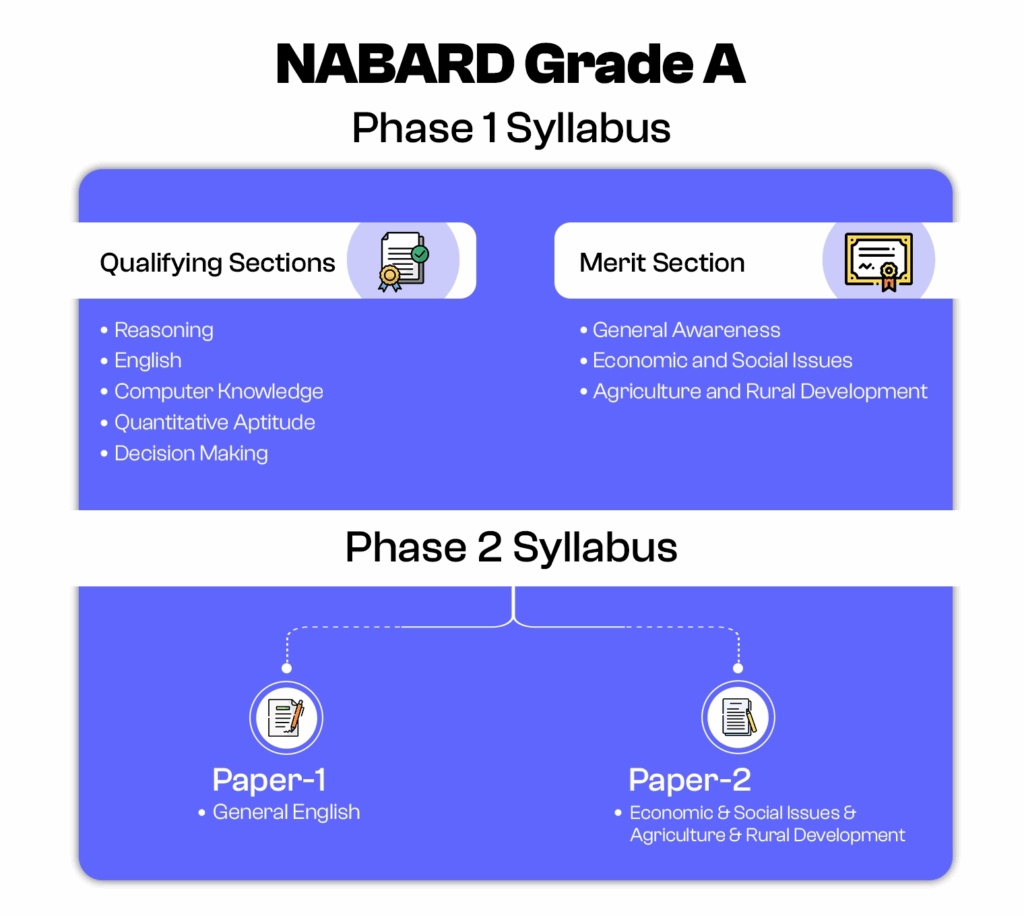
For NABARD Grade A Phase 2, the descriptive paper can feel overwhelming, but once you understand the structure, it’s about practicing your writing more than mugging up facts and rote memorization.
I remember one of my friends who cleared NABARD shared that he used to write one descriptive answer daily and got it checked by a peer. That simple habit made a big difference in his confidence.
So, how do you prepare smartly?
Smart Prep Tips for NABARD Grade A
Let me walk you through it with some practical examples. When I was preparing, I made the mistake of solving random MCQs without first analyzing what the exam really wanted. Only later did I learn that the best approach is to study the syllabus line by line and match it with past year papers. PYQs are and will be your lifeline in any exam you give in the future.
For example, if the syllabus says “Agriculture and Rural Development,” don’t just read a textbook cover to cover. Look at what NABARD actually asks: irrigation, cropping patterns, rural schemes, and recent budget highlights.
Why Small Plans Work Better Than Big Plans
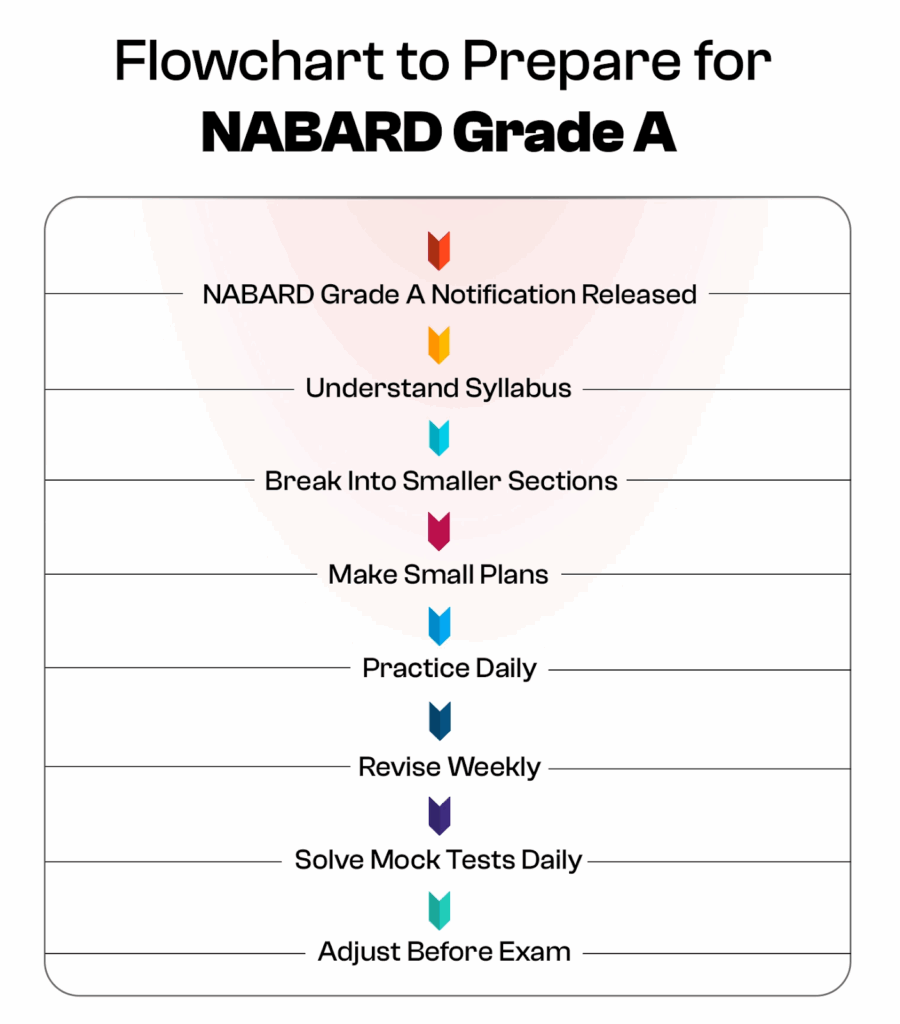
Another thing I’ve seen is that students overestimate how much time they have. You think, “The notification will come, then I’ll plan.” But trust me, once it comes, time starts moving twice as fast. Instead of a big master plan, make micro plans.
How Daily Practice and Weekly Revision Help
Take “Practice Daily” for example. You need to solve 20 – 25 questions daily. This will ultimately help you increase how accurately you solve questions along with speed to answer those questiosns.
Similarly, “Revise Weekly” is something most people ignore. I personally lost marks in current affairs because I kept reading daily news but never revised weekly.
Don’t repeat that mistake – revision is your safety net.
The Role of Mock Tests in NABARD Grade A Prep
Mock tests deserve a separate mention. Many aspirants buy mock test series but never use them fully. I’ve seen people give one test, score poorly, and then avoid the next one out of fear.
If that’s you, here’s what I’d suggest: instead of chasing high scores immediately, use mocks as learning tools. After every test, spend more time analyzing your mistakes than celebrating your correct answers.
Adjusting Strategy Before the Exam
Adjusting before the exam is the final step. Don’t keep the same strategy till the last day if it’s not working. If you realise something is not working, then move on to the next plan or improvise it according to your needs. Your time is very precious to waste on anything else.
Final Thoughts on NABARD Grade A Preparation
Before I wrap up, let me share one last anecdote. A close friend of mine started preparing for NABARD after the notification was already released. She thought she was too late. But instead of drowning in books, she picked the syllabus, made a simple 40-day plan, gave mocks regularly, and revised her notes twice. She didn’t top the exam, but she cleared it comfortably.
It’s not about how early you start, it’s about how smartly you prepare once the notification comes. So, when the NABARD Grade A notification comes out this month or whenever, don’t let anxiety eat into your time.
Remember: understand the syllabus, break it into sections, make small daily goals, practice and revise regularly, and adjust whenever needed.