What Beginners Should Do Once the IBBI Grade A Notification Releases
I know you are waiting for the IBBI Grade A notification to start your preparation, but the reality is you need to start your preparation today to beat the intense competition.
After the release of the notification, you’ll get roughly a month for preparation, which is not enough to thoroughly cover the vast syllabus.
But, with small planning, you can prepare for the IBBI Grade A exam after the release of the notification with the below given steps.
So, let’s dive deep into the preparation.
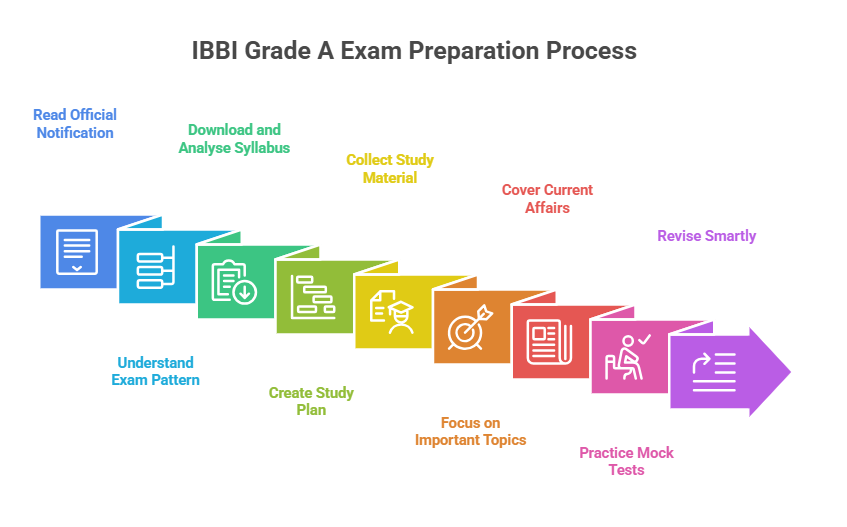
Step 1: Read the Official Notification Carefully
The IBBI Grade A notification is your go-to document for the majority of your exam-related queries. So, upon the release of the IBBI Grade A notification, you must download it and go through the official notification in detail. It gives you crucial information such as:
- Exam dates
- Number of vacancies
- Eligibility criteria
- Age limit and relaxations
- Educational qualification
- Pattern and syllabus
- Registration process
- Application fee
- Required documents
Step 2: Understand the IBBI Grade A Exam Pattern
After making sure that you are eligible to apply for the exam, it’s time to check the exam pattern to understand the exam structure clearly. This helps you plan your preparation based on the subjects and their weightage.
IBBI Grade A Selection Process
The selection process usually has 2 stages:
- Phase 1 (Objective Type)
- Group Discussion and Interview
Phase 1: Online Exam Pattern
- Type: Multiple Choice Questions (MCQs)
- Subjects: English Language, Reasoning Ability, Quantitative Aptitude, General Awareness, Economy and Financial Sector Awareness, and Insolvency and Related Laws
- Total Questions: 150
- Total Marks: 150
- Duration: 120 minutes
Group Discussion (GD) and Interview
- GD Marks: 20
- Interview Marks: 30
Step 3: Download and Analyse the Syllabus
Beginners often make the mistake of studying randomly. The IBBI syllabus is vast, so you need to know what to study and what to skip. Check out the syllabus mentioned in the official notification.
If the detailed syllabus is not given in the official syllabus, you need to review the previous year’s papers to identify the topics from which questions were asked.
Step 4: Create a Realistic Study Plan
Your study plan can make or break your chances of cracking the IBBI Grade A exam. Make sure your study plan is practical so that you can actually follow it.
How to Plan Your Study Schedule
- Divide the day into 3-4 study slots (morning, afternoon, evening, and night)
- Allocate 2 hours for conceptual subjects like Finance or Law.
- Keep 1 hour for reasoning and quant practice.
- Spend 30 minutes on current affairs daily.
- Dedicate 1 day per week to mock tests and revision.
Step 5: Collect Reliable Study Material
Beginners often get stuck choosing between too many books and PDFs. To avoid confusion, stick to one source per subject.
Recommended Resources
- Finance: Indian Financial System by Bharti Pathak
- Economics: Indian Economy by Ramesh Singh or Sanjeev Verma
- Law: Bare Acts and IBBI official resources
- Quant & Reasoning: R.S. Aggarwal
- English: Objective General English by S.P. Bakshi
- Current Affairs: PIB, The Hindu Business Line, Economic Times
- EduTap Courses: Comprehensive study materials for regulatory body exams
Important Note: Instead of collecting multiple resources, just select 1 or 2 (Max) sources per subject and stick to them.
Step 6: Focus on Important Topics
As a beginner, it’s impossible to cover everything in detail, so focus on the most important and high-weightage topics first. This helps you study smartly and use your time wisely.
- Identify high-scoring topics from past papers.
- Revise key formulas, definitions, and concepts regularly.
- Practice questions from these areas daily.
- Don’t waste time on rarely asked topics at the start.
Step 7: Cover Current Affairs and Financial Awareness
Current affairs play a major role in both Phase 1 and the interview. For beginners, this is the easiest section to score well if you stay regular.
What to Cover
- Last 6–8 months of financial and economic current affairs
- Government reports and indices
- RBI, SEBI, and IBBI updates
- Budget and Economic Survey highlights
Sources to Follow
- PIB
- The Hindu
- Economic Times
- Magazines compilations
Step 8: Practice Mock Tests
Once you’ve covered the basics, start testing yourself by practicing questions. It’ll help you:
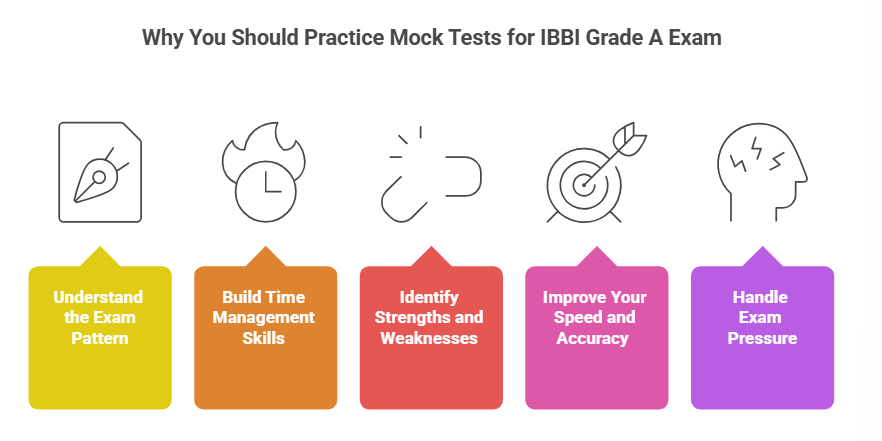
- Understand the exam pattern
- Build time management skills
- Identify strengths and weaknesses
- Improve your speed and accuracy
- Handle exam pressure
How to Practice
- Attempt topic-wise quizzes after every chapter.
- Analyze your mistakes and revise weak topics.
- Take 1-2 mock tests per week.
Step 9: Revise Smartly Before the Exam
In the final weeks before the exam, focus only on revision and mock tests.
- Revise short notes, formulas, and definitions.
- Revisit important IBC sections and financial concepts.
- Go through the monthly current affairs compilations again.
- Take sectional tests to strengthen weak areas.
Conclusion
For beginners, the key to clearing the IBBI Grade A exam is to stay clear, consistent, and smart in your preparation.
Understand the exam pattern and syllabus, build your basics, and practice regularly. Stay positive, be disciplined, and keep improving every day. With the right mindset and effort, you can achieve your goal of becoming an IBBI Grade A Officer.